


Small satellites used to drift. The next generation has to move.
Ten years ago, most CubeSats flew without propulsion. They went where the rocket left them. They stayed until drag pulled them down.
That is changing fast. Operators now fly constellations, not single satellites. And constellations have jobs a drifting satellite cannot do.
Four jobs a thruster does
Collision avoidance. When a conjunction warning arrives, a satellite with a thruster can step aside. One without it can only wait.
Formation flying. Wide-aperture sensing and many tactical missions need satellites to hold a precise position relative to each other.
Station keeping and phasing. Spreading satellites into the right slots after launch, then keeping them there.
Clean end of life. Lowering the orbit so the satellite leaves on time, as regulators increasingly require.
What ARM-O is
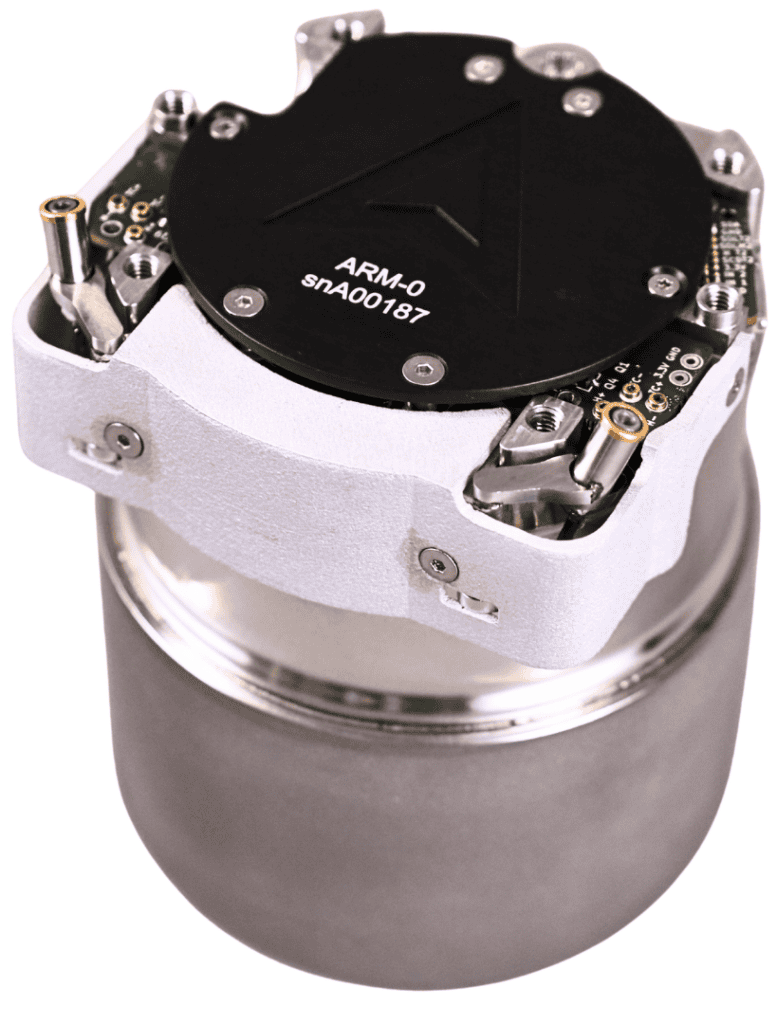
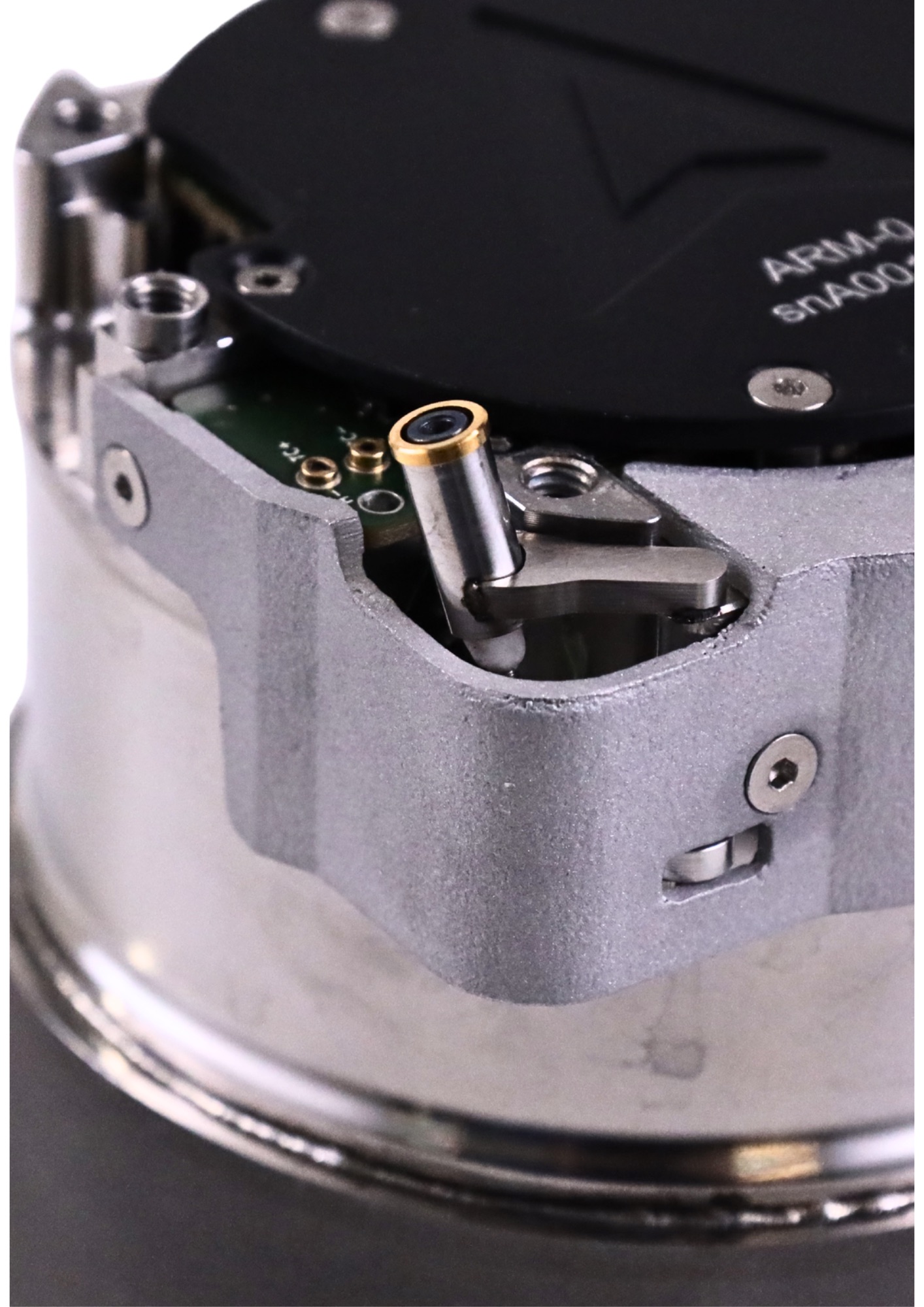
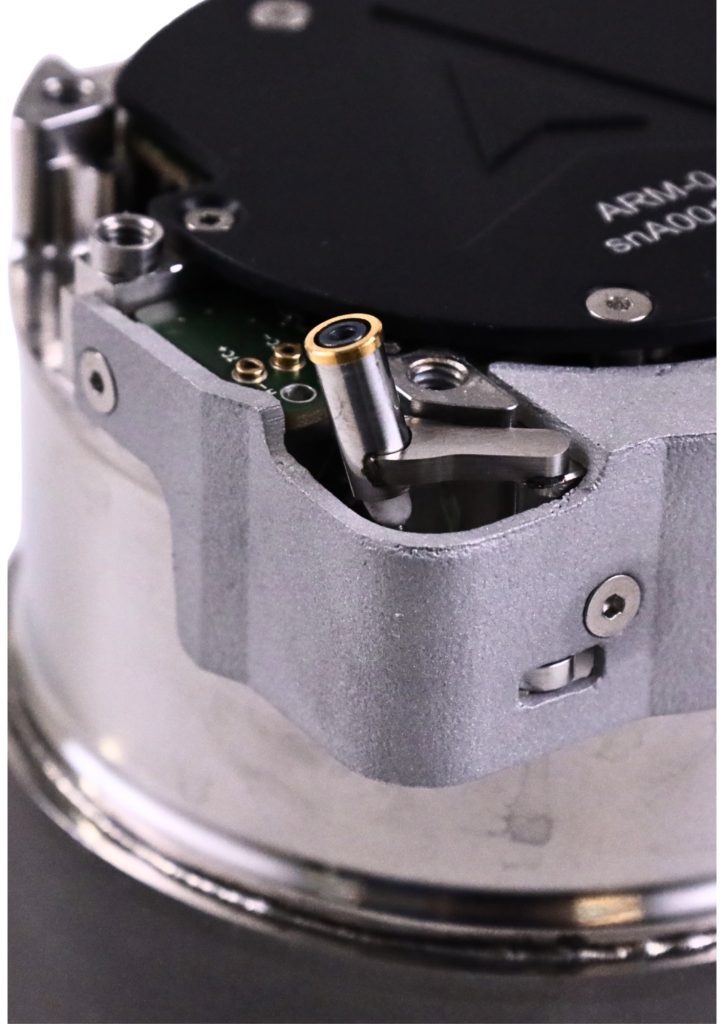
ARM-O is Aurora’s water-based propulsion module for small satellites. Each unit carries two thrusters. The thruster heads are aimed toward the satellite’s centre of mass, so a burn moves the satellite rather than spinning it.
After a 60-second preheat, it responds in 2 milliseconds.
ARM-O now comes in two versions. They share the same envelope, the same mass and the same total impulse. The difference is how hard they push.
ARM-O LP: precision on a small power budget
ARM-O LP delivers 3 mN of thrust at 5 W per mN. It is built for small satellites with limited power.
Its strength is short, precise pulses. That suits station keeping, phasing and formation flying, where the satellite has to hold its place rather than change it quickly.
ARM-O HP: manoeuvres that cannot wait
ARM-O HP delivers 20 mN of thrust at 4 W per mN. It is the high-thrust version.
It is built for manoeuvres that have to be finished quickly: collision avoidance, orbit corrections and drag compensation.
The two side by side
| LP Small | LP Medium | HP Small | HP Medium | |
|---|---|---|---|---|
| Form factor | 0.6U | 1U | 0.6U | 1U |
| Total impulse | 120–150 Ns | 250–300 Ns | 120–150 Ns | 250–300 Ns |
| Wet mass | 0.7 kg | 1 kg | 0.7 kg | 1 kg |
| Thrust (BoL) | 3 mN | 3 mN | 20 mN | 20 mN |
| Power | 5 W/mN | 5 W/mN | 4 W/mN | 4 W/mN |
| Lead time | 6–9 months | 6–9 months | 6–9 months | 6–9 months |
These configurations are available without customisation. Other configurations can also be built.
Which one fits your mission
Start with two questions. How much power can the satellite spare? And how fast does the manoeuvre have to finish?
If power is tight and the job is holding position, choose LP. If the manoeuvre has a deadline, choose HP.
Why water
Water is not the obvious choice for a propellant. It is the practical one.
It is non-toxic. ARM-O ships fuelled and is unpressurised at launch. There is no hazardous fuelling crew and no operations at the launch site. Integration is simpler and the schedule risk is lower. For a team building its first satellites, that saves weeks.
Flight heritage
Aurora has flown in orbit since 2022: AuroraSat-1, Strider and EstCube-2. In November 2025, C3S’s Wisdom launched as our first full propulsion system mission. More missions are scheduled for 2026 and 2027.
Size it with us
Send us your mission profile and we will size ARM-O LP or HP with you. Write to sales@aurorapt.fi.
About Aurora Propulsion Technologies
Aurora Propulsion Technologies was founded in Otaniemi, Espoo, in 2018 by Perttu Yli-Opas and Roope Takala. It builds water-based thrusters for small satellites and Plasma Brakes for safe deorbiting. Learn more at aurorapt.space.